
TL;DR / Quick Answer
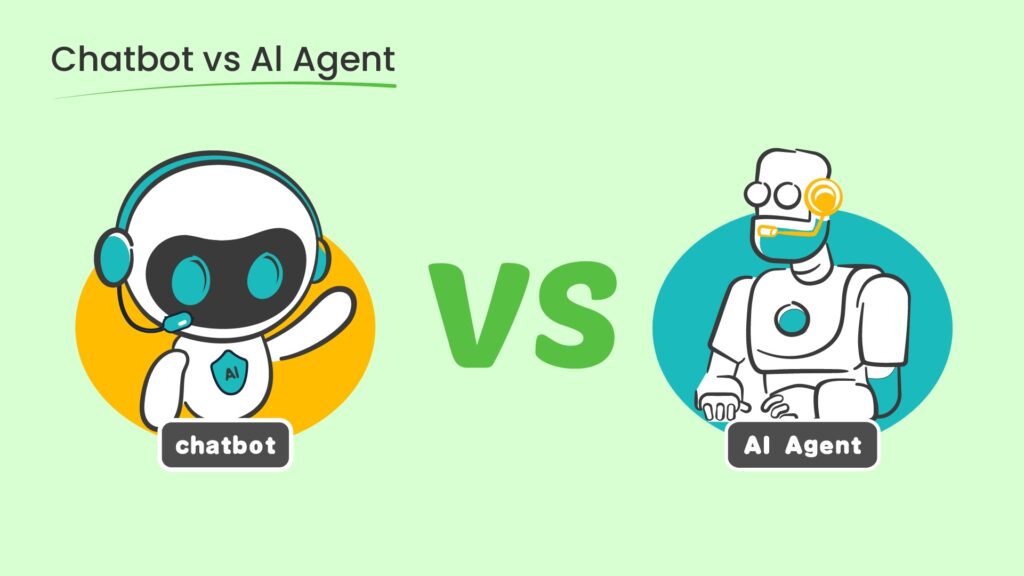
ChatGPT is a conversational AI that responds to prompts, while AI agents are autonomous systems that can plan tasks and take actions on your behalf. ChatGPT thinks and explains; AI agents decide and act.
Table of Contents
Introduction: AI Agents vs ChatGPT: Key Differences Explained
If you’ve been exploring AI tools lately, you’ve probably wondered: what’s the actual difference between AI agents and ChatGPT?
It’s a fair question. ChatGPT feels intelligent. It answers questions, writes essays, debugs code, and even seems to “understand” you. So isn’t that an AI agent?
Not quite.
Here’s why the confusion exists: many AI agents actually use ChatGPT (or similar models) under the hood. So you’re not wrong to see a connection but they’re not the same thing.
Beginners often ask:
- “Is ChatGPT an AI agent?”
- “Can ChatGPT do tasks for me automatically?”
- “What’s the real difference between AI agents and ChatGPT?”
By the end of this post, you’ll clearly understand what ChatGPT is, what an AI agent is, and when to use each. Let’s clear up the confusion once and for all.
What Is ChatGPT? (In Simple Terms)
ChatGPT is a conversational AI a text-based tool that responds to your prompts.
Think of it as an incredibly smart advisor you can talk to anytime. You ask questions, give it tasks, and it generates responses based on what you’ve said.
What ChatGPT Is Designed For
ChatGPT excels at:
- Answering questions (“What’s the capital of France?”)
- Explaining concepts (“How does photosynthesis work?”)
- Writing content (emails, blog posts, code, poetry)
- Brainstorming ideas (“Give me 10 startup ideas in the health tech space”)
It’s phenomenal at thinking, reasoning, and generating text.
What ChatGPT Does NOT Do on Its Own
Here’s the catch: ChatGPT doesn’t take action outside the conversation.
It doesn’t:
- Monitor systems or data streams
- Take actions automatically (like sending emails or booking flights)
- Run continuously in the background
- Remember conversations across sessions (unless you’re using memory features)
Simple analogy:
ChatGPT is like a smart advisor you consult when you need help. The advisor gives you excellent suggestions, but you still have to execute them.
What Is an AI Agent? (Quick Refresher)
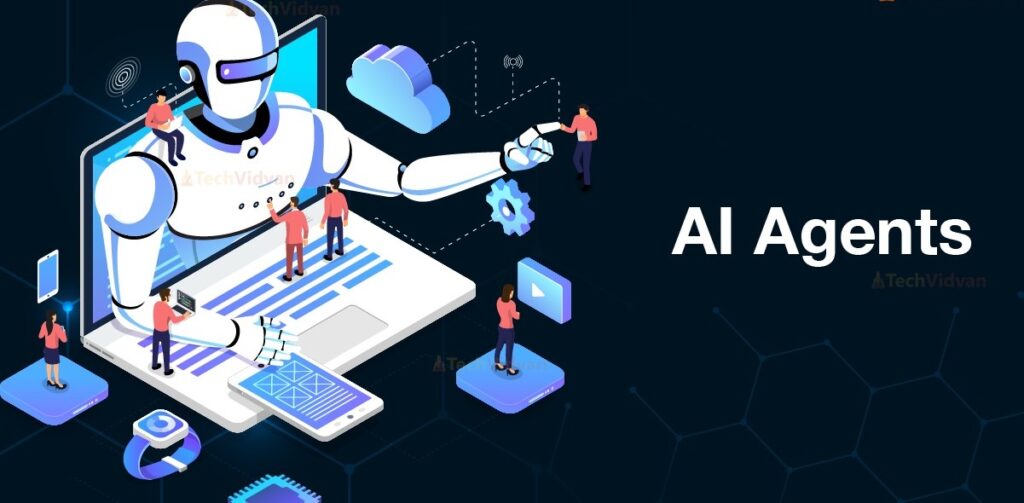
An AI agent is an autonomous software system that works toward goals, observes its environment, makes decisions, and takes actions often without constant human input.
The key difference? Agents act independently.
AI agents follow this cycle:
- Observe information (emails, data, triggers)
- Decide what to do next
- Act on that decision
- Repeat until the goal is complete
Analogy:
An AI agent is like an assistant working in the background. You give it a mission, and it handles the execution while you focus on other things.
👉 Want the full breakdown? Check out: [AI Agents for Beginners: What They Are & How They Work]
The Core Difference: Thinking vs Acting
This is the heart of the difference between AI agents and ChatGPT.
ChatGPT: Thinks & Responds
ChatGPT is reactive. It waits for you to prompt it, generates a response, and then stops.
Example:
You: “I need to follow up with that client.”
ChatGPT: “You should send a polite email mentioning the proposal you sent last week. Here’s a draft you could use…”
ChatGPT gives you the answer. But you still have to copy the email, open Gmail, paste it, and hit send.
AI Agents: Decide & Act
AI agents are proactive. They monitor situations, choose the next step, execute actions, and repeat automatically.
Example:
You set up an AI agent with the goal: “Follow up with clients who haven’t responded to proposals within 3 days.”
The agent:
- Monitors your sent emails
- Identifies which clients haven’t replied
- Drafts a follow-up message
- Sends the email automatically
- Logs the action in your CRM
- Schedules a reminder if there’s still no response
You don’t lift a finger. The agent handles everything.
That’s the difference.
ChatGPT helps you think about what to do. AI agents actually do it for you.
Side-by-Side Comparison: AI Agents vs ChatGPT
Here’s a quick visual breakdown:
| Feature | ChatGPT | AI Agents |
|---|---|---|
| Primary role | Conversation & reasoning | Task execution & automation |
| Autonomy | ❌ No | ✅ Yes |
| Works continuously | ❌ Only when prompted | ✅ Runs 24/7 if needed |
| Can take actions | ❌ (by default) | ✅ Core feature |
| Needs prompting every time | ✅ Yes | ❌ Operates independently |
| Uses tools/APIs | Limited (plugins available) | Core capability |
| Best for | Thinking, writing, explaining | Doing, automating, monitoring |
This table makes it clear: ChatGPT vs AI agents isn’t about which is “better” it’s about which tool fits the job.
Tools vs Agents: Where ChatGPT Fits In
Here’s where things get interesting (and a bit confusing).
ChatGPT can be part of an AI agent, but ChatGPT alone is not an AI agent.
Let me explain.
ChatGPT as a Component
Many AI agents use ChatGPT (or similar language models like Claude or GPT-4) as the “brain” that powers their reasoning and decision-making.
But the agent is the entire system not just the language model.
Analogy:
- ChatGPT = the engine
- AI agent = the car (engine + wheels + steering + brakes + GPS)
The engine is essential, but it’s not the whole vehicle.
Why This Matters
When people ask “is ChatGPT an AI agent,” the answer is: not by itself.
ChatGPT becomes part of an AI agent when it’s connected to:
- Tools and APIs (for taking actions)
- Memory systems (for tracking context over time)
- Triggers and workflows (for operating autonomously)
So if you’re using ChatGPT in the browser, you’re using conversational AI not an agent. But if a developer builds an agent powered by ChatGPT that monitors your inbox and sends emails automatically, that’s an AI agent.
Can ChatGPT Act Like an AI Agent?
Short answer: Sometimes, with the right setup.
When ChatGPT Is NOT an Agent
If you’re using ChatGPT in its standard form:
- You type prompts, it responds
- No memory across separate conversations (unless memory is enabled)
- No automatic execution of tasks
- No continuous monitoring
This is pure conversational AI.
When ChatGPT CAN Behave Like an Agent
ChatGPT can start to act like an agent when:
- Plugins or tools are enabled (like browsing the web, running code, or accessing APIs)
- It’s connected to automation platforms (like Zapier or Make)
- It’s embedded in a larger workflow that gives it memory, triggers, and permissions
Example:
You connect ChatGPT to a workflow automation tool. Now, when a new email arrives, ChatGPT analyzes it, categorizes it, drafts a response, and (if approved) sends the reply automatically.
In this setup, ChatGPT is functioning as part of an AI agent system.
Key takeaway:
ChatGPT alone is not an AI agent but it can power one.
Which Should You Use? (Practical Guidance)
So when should you use ChatGPT, and when should you use AI agents?
Use ChatGPT If You Want To:
- Learn something new
- Think through problems or ideas
- Write content (emails, reports, code)
- Explore possibilities and brainstorm
- Get advice on what to do next
ChatGPT is perfect when you need to stay in the driver’s seat and make the final call.
Use AI Agents If You Want To:
- Save time on repetitive tasks
- Automate workflows (email management, data entry, scheduling)
- Monitor things continuously (stock prices, customer messages, system alerts)
- Reduce manual work and let software handle execution
AI agents shine when tasks are predictable, repeatable, and don’t need constant human judgment.
The bottom line:
ChatGPT helps you think better. AI agents help you work less.
You don’t have to choose between them use both strategically.
👉 Ready to try agents? Check out: [How Do AI Agents Work? Step-by-Step Explanation]
Future Outlook: Where This Is Going
Here’s what the future of AI agents vs conversational AI likely looks like:
Chat interfaces will become agent controllers.
Instead of clicking through apps, you’ll give high-level commands to a conversational AI (like ChatGPT), and AI agents will handle the execution in the background.
Example:
You: “Plan a team offsite in Austin for 20 people in March.”
ChatGPT: “Got it. I’ll have the agent research venues, check availability, send calendar invites, and book accommodations.”
The conversational AI becomes the interface. The agents do the work.
ChatGPT-like models remain the reasoning layer.
AI agents will continue using models like GPT, Claude, or similar systems to power their decision-making but they’ll be embedded in larger workflows that connect to tools, databases, and APIs.
This isn’t far off. It’s already happening with tools like Microsoft Copilot, AutoGPT, and custom-built agent systems.
The line between “chatting with AI” and “AI doing tasks for you” will keep blurring but the distinction will still matter.
Conclusion
So, what’s the difference between AI agents and ChatGPT?
ChatGPT is conversational AI it thinks, explains, and responds when you prompt it. It’s brilliant for reasoning, writing, and brainstorming, but it doesn’t take action on its own.
AI agents are autonomous systems that observe, decide, and act independently. They execute tasks, monitor data, and operate continuously without needing constant input.
You don’t have to choose one or the other. Use ChatGPT when you need to think through problems, and use AI agents when you want to automate execution.
👉 Next steps: [Real-Life AI Agent Examples & Use Cases]
1. Is ChatGPT an AI agent?
No, ChatGPT by itself is not an AI agent it’s a conversational AI tool that responds to prompts. However, ChatGPT can be part of an AI agent when it’s connected to tools, APIs, and automation workflows that allow it to take actions autonomously.
2. Can AI agents work without ChatGPT?
Yes, absolutely. Many AI agents don’t use ChatGPT at all. Some use other language models (like Claude or GPT-4), while others rely entirely on rule-based logic without any conversational AI. AI agents existed long before ChatGPT automation tools like Zapier, email filters, and trading bots are all examples of agents that work independently.
3. What’s better: AI agents or ChatGPT?
Neither is “better” they serve different purposes. ChatGPT is better for thinking, learning, writing, and brainstorming because it excels at conversation and reasoning. AI agents are better for automating repetitive tasks, monitoring systems, and executing actions without constant supervision. The best approach is using both strategically.
4. Are chatbots the same as AI agents?
No. Chatbots (including advanced ones like ChatGPT) are reactive tools that respond to user input within a conversation. AI agents are proactive systems that can plan multi-step tasks and take actions in external systems autonomously. A chatbot waits for you to ask; an AI agent works independently toward a goal.





Leave a Comment